Evaluating Foliagis: A Detailed Look at Its Floral Design Capabilities and Use Cases
Selecting the right typeface is rarely a purely aesthetic decision; it is a strategic choice that influences readability, brand perception, and overall user experience. For designers working in the lifestyle, wellness, and creative sectors, the demand for fonts that convey organic elegance has never been higher. Foliagis emerges as a specialized solution in this niche, offering a distinct visual identity rooted in botanical motifs. This article provides a comprehensive evaluation of Foliagis, examining its structural characteristics, ideal applications, and how it stacks up against broader categories of display and decorative fonts.
Understanding the Structural Identity of Foliagis
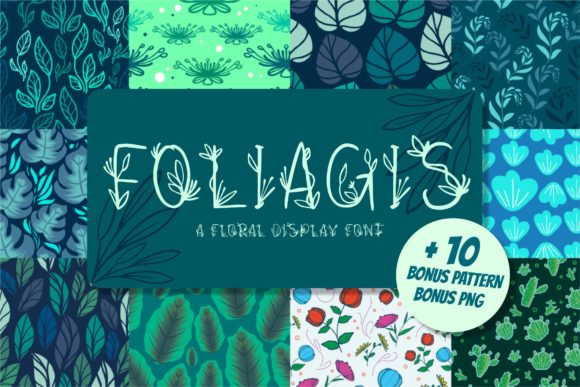
Foliagis is not merely a standard serif or sans-serif font with added decorations. It is classified as a beautiful display font with a pronounced floral style. The defining characteristic of Foliagis lies in its integration of natural elements directly into the letterforms. When you examine the characters closely, you will notice leaves, vines, and flourish elements woven into the strokes of the letters. This is not superficial ornamentation but rather a cohesive design language where the typography itself mimics the growth patterns of plants.
This approach creates an immediate emotional connection with the viewer. The font evokes feelings of nature, growth, femininity, and sophistication. However, this high level of detail comes with specific technical considerations. Because the glyphs contain intricate details, Foliagis performs best at larger sizes. At small point sizes, the fine lines of the leaf structures can blur or disappear, reducing legibility. Therefore, understanding the scale at which the font will be used is critical before integrating it into a project.
The Balance Between Ornamentation and Readability
In the spectrum of decorative typography, there is often a trade-off between artistic flair and functional clarity. Foliagis sits firmly on the artistic end of this spectrum. Unlike "script" fonts that attempt to mimic handwriting, Foliagis retains the structural integrity of printed letters while embellishing them. This makes it slightly more stable than loose cursive alternatives, yet still highly stylized.
For designers, this means that Foliagis should typically serve as a headline or a focal point rather than body text. Using it for paragraphs would overwhelm the reader and hinder comprehension. The font’s strength lies in its ability to grab attention quickly through its unique silhouette. When paired correctly with simpler, neutral typefaces, Foliagis can anchor a design without causing visual chaos.
Ideal Applications for Foliagis
Determining where Foliagis fits best requires looking at industries that value aesthetics and organic themes. The font is particularly well-suited for projects where the subject matter aligns with nature, beauty, or celebration. Below are several key areas where Foliagis demonstrates its versatility and impact.
- Florist Logo Designs: This is perhaps the most intuitive application. A florist needs a logo that communicates their trade instantly. Foliagis does this by literally incorporating plant life into the name. It eliminates the need for separate iconography in many cases, allowing the text to stand alone as a powerful brand mark.
- Event Previews and Invitations: Weddings, garden parties, and spring festivals often require invitations that feel elegant and festive. Foliagis adds a touch of luxury and thematic relevance to event previews. Its flourishes can guide the eye across the page, creating a sense of movement and grace appropriate for celebratory contexts.
- Cover Designs for Publications: Magazines, blogs, or digital newsletters focused on gardening, home decor, or women’s lifestyle can benefit from the cover appeal of Foliagis. The font’s bold presence ensures that titles stand out on crowded screens or magazine racks. It signals to the reader that the content within is curated, stylish, and perhaps a bit romantic.
- Apparel and Merchandise Graphics: In the realm of shirt designs and tote bags, Foliagis offers a trendy look that appeals to consumers interested in bohemian or eco-friendly fashion. The intricate details translate well to screen printing and embroidery, provided the resolution is handled correctly. It allows brands to create merchandise that feels artisanal rather than mass-produced.
Comparative Analysis: Foliagis vs. Other Display Options
When evaluating Foliagis, it is helpful to compare it against other common typographic approaches used in similar design contexts. This comparison helps clarify why a designer might choose Foliagis over a generic script or a rigid geometric font.
Foliagis vs. Traditional Script Fonts
Traditional script fonts aim to replicate human handwriting. While they offer fluidity, they can sometimes appear chaotic or difficult to read if the connections between letters are too complex. Foliagis differs by maintaining clearer letter separation while adding organic texture. Where a script font might rely on the flow of the pen stroke, Foliagis relies on the structure of the leaf. This makes Foliagis potentially more durable in branding contexts, as it is less likely to look dated compared to trends in calligraphy styles. Additionally, Foliagis often carries a stronger "brandable" quality because its shapes are more distinctive and less generic than standard cursive.
Foliagis vs. Minimalist Sans-Serif
In modern design, minimalism is a dominant force. A clean sans-serif font conveys professionalism, clarity, and neutrality. However, it lacks personality. If a brand wants to evoke warmth, creativity, or a connection to the earth, a plain sans-serif may fall flat. Foliagis fills this gap. It provides the personality that minimalist fonts lack without sacrificing the structured look of a designed typeface. The tradeoff here is versatility; a sans-serif works everywhere, whereas Foliagis is highly contextual. A designer must decide whether the project requires broad utility or specific atmospheric impact.
Foliagis vs. Generic Decorative Fonts
There are countless decorative fonts available, many of which use clip-art-like elements attached to letters. These can often look cheap or uncoordinated. Foliagis stands out because its floral elements appear integrated into the font’s architecture. The leaves grow out of the stems of the letters rather than being pasted on top. This cohesion results in a more professional and polished final product. When comparing options, designers should look for this level of integration to ensure the font elevates the design rather than distracting from it.
Decision Factors: When to Choose Foliagis
Choosing Foliagis is not about finding the "best" font in absolute terms, but rather the best fit for a specific set of constraints and goals. Consider the following factors when deciding if this font aligns with your project needs.
- Brand Personality: Does your brand voice align with nature, elegance, and softness? If your brand is industrial, tech-focused, or strictly corporate, Foliagis will likely clash with your identity. It is best reserved for brands that want to appear approachable, artistic, and organic.
- Scale of Usage: Are you designing for large formats? Posters, billboards, book covers, and website headers are ideal. If your primary need is for small-scale UI elements, footnotes, or dense informational text, Foliagis is not the right tool. You would be better served by a highly legible serif or sans-serif font.
- Color Palette: Foliagis shines when paired with colors that complement its theme. Earth tones, pastels, and vibrant greens enhance its natural vibe. Conversely, using it with harsh, neon, or cold metallic colors might create a dissonant effect that undermines the font’s inherent warmth.
- Pairing Potential: Successful design often relies on contrast. Foliagis is visually busy. To make it work, it should be paired with a simple, understated font for supporting text. If you pair it with another ornate font, the design will become cluttered and confusing. The ability to find a good partner font is a crucial part of the evaluation process.
Limitations and Practical Considerations
No single font is a universal solution, and Foliagis has specific limitations that designers must respect. One significant limitation is character set availability. Decorative fonts often have smaller glyph sets than standard fonts. They may lack certain punctuation marks, numbers, or special symbols required for complex layouts. Before purchasing or downloading Foliagis, it is essential to check the full character map to ensure it includes all necessary symbols for your project.
Another consideration is licensing. As a specialized display font, Foliagis may come with specific usage rights. Some licenses restrict use in logos, while others allow unlimited commercial use. Understanding these legal boundaries is part of due diligence. Misusing a font can lead to copyright issues, so always review the end-user license agreement (EULA) carefully.
Furthermore, file compatibility should be noted. While most modern design software handles custom fonts well, older systems or web platforms may struggle with complex vector data. If you plan to embed Foliagis on a website, ensure that the font files are optimized for web delivery to maintain performance speeds. Heavy, detailed fonts can increase load times if not properly compressed.
Final Thoughts on Integration
Foliagis represents a thoughtful intersection of art and typography. It is not just a tool for writing words; it is a tool for creating atmosphere. For professionals in the graphic design, marketing, and creative fields, having access to such a specialized asset expands the range of expressive possibilities. By understanding its strengths in floral aesthetics and its limitations in scalability and density, designers can deploy Foliagis effectively.
The decision to use Foliagis should be driven by the narrative you wish to tell. If that narrative involves growth, beauty, and natural elegance, Foliagis offers a compelling visual vocabulary. It competes not by being the most versatile font, but by being the most authentic choice for its specific niche. When evaluated alongside alternatives, it holds its own through its cohesive design language and strong thematic presence. For those seeking to add a touch of organic sophistication to their projects, Foliagis remains a robust and attractive option worth serious consideration.